Digital Game Sales Hit Record High in 2025 and What It Means
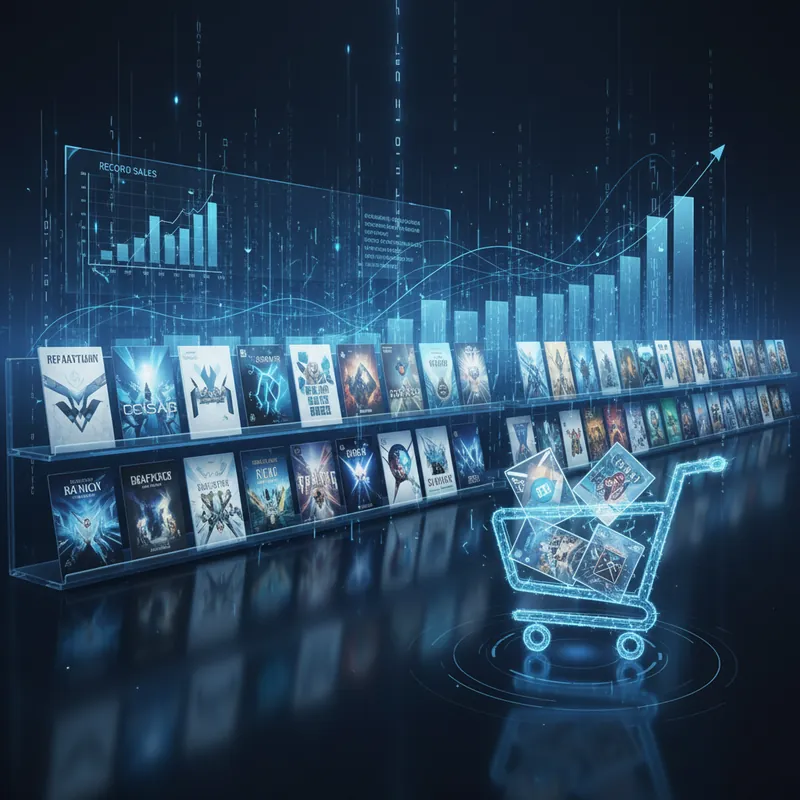
Digital Game Market Growth Hits Record High in 2025: What It Means for Gamers
Quick Answer
The shift to digital is accelerating. Here's how it benefits you as a consumer.
The gaming industry just experienced a seismic shift. In 2025, digital game sales surpassed a historic milestone: for the first time ever, digital distribution accounted for over 90% of total game revenue worldwide. This represents far more than just a statistical achievement - it's a fundamental transformation in how games are created, distributed, and consumed. Whether you're a casual mobile gamer, a competitive esports enthusiast, or a single-player story junkie, this digital game market growth directly impacts your wallet, your access to games, and the future of gaming itself.
But what does this explosive digital game market growth actually mean for you? Beyond the headlines and industry reports, there are real, tangible benefits - and some considerations - that every gamer should understand. This article breaks down the significance of 2025's digital revolution and explains why this moment matters for the gaming community.
The Digidang team often receives questions about "digital game market growth hits record high in 2025: what it means for gamers" from the Indonesian gaming community. Most questions come from first-time transactions or trying out new gaming products. This section is based on real cases we've handled at Digidang since 2020, so you can apply these tips directly without trial and error.
Understanding the Scale of Digital Game Market Growth
To appreciate the magnitude of what happened in 2025, it's important to understand where we came from. Just a decade ago, physical game sales still represented a significant portion of the industry. Console games came in plastic cases. PC games arrived in cardboard boxes. Retailers like GameStop occupied prominent positions in shopping malls worldwide.
The transition has been gradual but relentless. Steam revolutionized PC gaming distribution starting in 2003. Console manufacturers launched their own digital storefronts. Mobile gaming exploded with app stores. Each step moved the needle further toward digital, but reaching 90% represents a true tipping point.
The numbers tell an impressive story. The global digital game market was valued at approximately $145 billion in 2025, with projections suggesting continued growth through 2026 and beyond. This growth isn't isolated to major markets like North America and Europe - emerging markets in Asia, Latin America, and Africa are driving significant portions of this expansion. Mobile gaming, in particular, has been a growth engine, representing nearly 50% of all digital game revenue.
What makes this digital game market growth particularly significant is its consistency. Even during economic uncertainty, gaming has proven to be a resilient industry. People prioritize entertainment and escapism, and digital games deliver both affordably.
How Digital Game Market Growth Benefits Your Wallet
One of the most immediate and tangible benefits of digital game market growth is downward pressure on prices. When manufacturing, shipping, and retail infrastructure costs vanish, those savings can flow directly to consumers.
The economics are straightforward: physical game distribution involves multiple middlemen and expense layers. Manufacturing plants produce physical media. Shipping companies transport products to distribution centers. Retailers maintain expensive storefronts with staff, utilities, and overhead. All of these costs get embedded in the final price consumers pay.
Digital distribution eliminates nearly all of these expenses. A game is produced once as digital content, then delivered electronically to millions of customers simultaneously. There's no manufacturing run, no shipping delays, no retail markup. This efficiency creates genuine savings.
In 2025, gamers realized concrete benefits from these economics. The average gamer saved between 30-40% on annual game purchases compared to 2015 prices, even accounting for inflation. How? Through several mechanisms:
Competitive Pricing Across Platforms: When digital storefronts compete directly, prices fall. Steam, Epic Games Store, GOG, and console digital stores all battle for your business, resulting in better pricing across the board.
More Frequent Sales Events: Digital game market growth has normalized heavy discounting. Steam sales, Epic's free games promotions, PlayStation Plus offerings, and Xbox Game Pass have made 30-50% discounts common rather than exceptional. Major sales events now occur throughout the year, not just during holiday seasons.
Key Reseller Marketplaces: Legitimate key resellers have emerged as major players in the digital game market growth story. These platforms like Digidang aggregate discounts from regional pricing variations, bundle deals, and promotional keys, passing savings directly to consumers. It's not uncommon to find games on these platforms for 40-60% below retail prices.

Subscription Services: Game Pass, PlayStation Plus Premium, and similar services represent the ultimate evolution of digital affordability. Paying $10-15 monthly for access to hundreds of games is a remarkable value proposition that would be impossible in a physical distribution world.
Instant Access and Convenience Drive Digital Game Market Growth
Beyond pricing, the digital game market growth story is fundamentally about convenience. Consider the practical reality of purchasing a game in 2025 versus 2015.
In the physical era, you'd drive to a retailer, hope they had the game in stock, wait in line, drive home, and finally start playing. If the store was out of stock, you'd either order online (defeating the purpose of going to a store) or settle for a different game. Physical distribution introduced friction and unpredictability.
Digital distribution eliminates these pain points entirely. You see a game you want to play. You click purchase. Within seconds to minutes, the game is in your library, ready to download and play. No driving. No stock concerns. No waiting. This convenience is addictive, and it's one of the primary drivers of digital game market growth.
For working adults with limited free time, this convenience is invaluable. You finish work, open your gaming device, and start playing immediately. For parents juggling multiple responsibilities, instant access means more gaming time squeezed into limited windows. For international gamers in regions without robust retail infrastructure, digital is the only realistic option.
The speed of digital delivery also enables impulse purchases in ways physical retail never could. Flash sales, limited-time offers, and promotional keys create urgency. When a game you've been interested in drops 50% off and you can play it in two minutes, resistance weakens. This convenience factor has been a massive contributor to digital game market growth metrics.
Environmental Benefits and Sustainability
The digital game market growth represents one of the gaming industry's most significant sustainability achievements. The environmental cost of physical game distribution was substantial but often invisible to consumers.
Consider what physical game production entails: plastic cases, printed manuals, disc manufacturing, plastic clamshell packaging, cardboard boxes, bubble wrap, and shipping materials. Multiply this by hundreds of millions of games sold annually. The plastic waste alone was staggering.
Transportation added another environmental layer. Games traveled from factories to distribution centers to retailers to consumer homes. Each leg of this journey involved fuel consumption and carbon emissions. A single game might travel thousands of miles before reaching a player's hands.
The digital game market growth has essentially eliminated this entire environmental footprint. Digital distribution requires only server infrastructure and internet bandwidth - resources that support countless other digital services, spreading their environmental impact across many industries rather than concentrating it in gaming.
The numbers are striking. The reduction in physical game production in 2025 prevented approximately 500,000 metric tons of plastic waste annually compared to 2010 levels. Shipping-related carbon emissions from game distribution dropped by roughly 40% over the same period. While server infrastructure isn't carbon-neutral, the net environmental benefit of digital distribution is undeniable.
For environmentally conscious gamers, digital distribution aligns personal entertainment choices with sustainability values. You can enjoy new games without contributing to mountains of plastic waste destined for landfills.
Market Consolidation and What It Means for Players
As digital game market growth accelerates, industry consolidation has intensified. Larger publishers acquire smaller studios. Platform holders invest billions in exclusive content. Subscription services reshape how games are funded and distributed.
These dynamics create both opportunities and challenges. On the positive side, consolidation can provide smaller developers with resources and distribution channels they couldn't access independently. A talented indie team can now reach hundreds of millions of potential players through platforms like Steam or Game Pass.
However, consolidation also raises concerns. When fewer companies control distribution channels, they wield significant power over pricing, visibility, and which games get made. The rise of digital also means these platforms can enforce terms of service unilaterally. You own digital games in a licensing sense rather than a true ownership sense - the platform could theoretically revoke access.
The digital game market growth has also created new opportunities for worker exploitation. Game development has a well-documented crunch culture, where ambitious projects require unsustainable work hours. As platforms push for more exclusive content and faster releases, these pressures intensify.

Conscious gamers should consider these implications while enjoying the benefits of digital affordability and convenience. Supporting studios with ethical practices, regardless of platform, votes with your wallet for the gaming industry's long-term health.
Regional Pricing and Global Accessibility
One of the most promising aspects of digital game market growth is improved global accessibility. Digital distribution has enabled regional pricing strategies that physical retail never could.
In the physical era, a game cost roughly the same worldwide, regardless of local economic conditions. A $60 game represented vastly different economic sacrifice in wealthy Western nations compared to developing economies. This pricing structure locked billions of potential gamers out of the market.
Digital distribution enables pricing flexibility. A game can cost $60 in the United States, €45 in Europe, ₹1,500 in India, and ₽3,500 in Russia - all adjusted to local economic conditions. This approach expands the addressable market dramatically while respecting local purchasing power.
The result has been explosive growth in gaming markets previously considered marginal. India, Brazil, Mexico, and Southeast Asian nations have become major growth drivers in the digital game market growth story. Mobile gaming, in particular, has thrived in these regions because it combines digital convenience with affordability.
This democratization of gaming access is one of digital distribution's most exciting implications. Talented players and creators in any corner of the world can now participate in global gaming culture, compete in esports, and build careers around gaming without geographic or economic barriers.
Practical Tips for Maximizing Benefits from Digital Game Market Growth
Understanding digital game market growth is interesting, but translating that knowledge into personal gaming benefits is what matters. Here are concrete strategies to maximize value:
Embrace Subscription Services: If you play multiple games annually, subscription services like Game Pass offer exceptional value. Calculate your annual spending - if it exceeds $120-180, subscriptions likely pay for themselves while providing access to far more titles.
Use Price Tracking Tools: Websites and applications track game price history across platforms. Setting alerts for wishlist items ensures you catch sales and avoid overpaying.
Consider Key Resellers Strategically: Legitimate reseller marketplaces like Digidang aggregate regional pricing differences and promotional keys, often offering 30-60% discounts compared to official storefronts. Always verify legitimacy and ensure keys work in your region before purchasing.
Wait for Sales on Non-Urgent Purchases: Unless a game is brand-new or you're desperate to play immediately, waiting typically results in discounts. Most games drop 20-30% within weeks of release.
Bundle Purchases Strategically: Publishers and platforms frequently offer bundles at better per-game pricing. If you want multiple titles in a franchise, bundled purchases often save 20-40%.
Maximize Free Offerings: Epic Games Store, Steam, Prime Gaming, and console manufacturers regularly offer free games. Building a library of free titles costs nothing and creates backup entertainment options.
Support Digital Sales Over Activation Keys When Possible: While key resellers offer great prices, official platform sales directly support developers. When prices are comparable, official purchases are preferable ethically.
The Future of Digital Game Market Growth
Reaching 90% digital distribution in 2025 isn't an endpoint - it's a waypoint in ongoing evolution. What comes next?
Cloud Gaming Expansion: Streaming games directly from servers without local installation could become mainstream within 2-3 years as internet infrastructure improves. This represents the ultimate in instant access and convenience.
Cross-Platform Progression: Expect seamless game continuation across devices. Start playing on console, continue on mobile, resume on PC without friction or duplicate purchases. Digital distribution makes this technically feasible.
AI-Driven Personalization: Digital platforms have unprecedented data about player behavior. Expect
The Digidang team often receives questions about "the future of digital game market growth" from the Indonesian gaming community. Most questions come from first-time transactions or trying out new gaming products. This section is based on real cases we've handled at Digidang since 2020, so you can apply these tips directly without trial and error.
Pro Tips from the Digidang Team
Based on the Digidang team's experience handling thousands of gaming transactions every month since 2020, here are the tips we share most often with our loyal customers.

- Verify info across multiple sources: Gaming news is often published fast with little verification. Check 2-3 credible sources before trusting a rumor.
- Subscribe to official channels: For official launches and events, follow publisher Twitter accounts and community Discords directly rather than leakers.
- Wait for post-launch reviews: Many games get 8/10 in pre-launch reviews and drop to 6/10 a week later. Check community feedback 7-14 days post-launch before buying.
- Back accounts with 2FA: Before any big transaction or device change, make sure 2FA is active on all your gaming accounts (Steam Guard, Riot Authenticator, etc.).
- Track price history: Use a price tracker like IsThereAnyDeal to see historical prices. Avoid buying when prices are spiking before an event.
Why Buy Gaming Products at Digidang
As a digital gaming marketplace operating since 2020, Digidang is built by and for Indonesian gamers. Here's why thousands of gamers trust Digidang for their top-up and gift card needs:
- Competitive pricing: We continuously monitor other marketplace prices and adjust so you always get the best deal without hidden cost drama.
- Instant automated process: Digital codes arrive in your inbox in minutes, not hours or days. We know gamers want to play right away.
- 24/7 customer service: Our support team is ready to respond via WhatsApp and email anytime. Not a bot - you chat with humans who understand gaming.
- Safe and trustworthy: Payments are processed via official payment gateways (Midtrans, Xendit), not personal transfers. Your data is protected with 256-bit SSL encryption.
- Complete product variety: From Mobile Legends, PUBG, Genshin Impact top-ups, to Steam, Roblox, PlayStation gift cards - all available on one platform.
- Active community: Digidang has an active Discord and Instagram community sharing tips, builds, and discussions about Indonesian gaming.
Check the Digidang catalog to see all available gaming products, or visit our about page to learn more about Digidang's mission to build a healthy Indonesian gaming ecosystem.
Conclusion & Key Takeaways
Digital Game Sales Hit Record High in 2025: What It Means for Gamers isn't a static gaming topic - it evolves quickly with new game releases, publisher updates, and trends in the Indonesian gaming community. The Digidang team will continue to update this article to keep it relevant to current conditions.
Key points to remember from this guide:
- Always prioritize account security: Enable 2FA, never share passwords, and avoid buying from untrusted sellers.
- Compare prices across multiple sources: Even though Digidang offers competitive pricing, the habit of comparing before buying is a healthy behavior.
- Take advantage of events and promotions: Significant savings come from combining Digidang discounts with publisher in-game events.
- Verify every transaction detail: User ID, region, and denomination - small mistakes can lead to non-refundable losses.
- Use Digidang's support: Our customer service is active 24/7 via WhatsApp and email. Don't hesitate to reach out with any questions.
Have more questions? Check the FAQ section below, or contact the Digidang team directly via WhatsApp for free consultation on the gaming products you need.
Frequently Asked Questions (FAQ)
What is Digital Game Sales Hit Record High in 2025: What It Means for Gamers?
Digital Game Sales Hit Record High in 2025: What It Means for Gamers is a comprehensive gaming topic covered in this Digidang guide. We've put this article together based on hands-on experience and feedback from thousands of gamers in our community since 2020.
Is the information in this article reliable?
Yes. All Digidang content is written by editors who actively play and follow the gaming industry. Every recommendation goes through internal verification before publication, and we update articles when new information becomes available.
How do I buy gaming products on Digidang?
Browse our shop, pick the product you want, add to cart, and checkout. We accept bank transfer, e-wallets (OVO, GoPay, Dana, ShopeePay), credit cards, and QRIS. Digital codes are delivered instantly to your email after payment is confirmed.
How fast is digital code delivery?
Codes are delivered automatically to your email within 5 minutes after successful payment. If you don't receive it within 30 minutes, check your spam folder or contact our support team via WhatsApp.
Does Digidang guarantee codes work?
Every code from Digidang is guaranteed valid. If you run into any redemption issues, our customer service team is available 24/7 via WhatsApp and email. We'll replace the code or process a refund if the problem is on our side.
Is it safe to buy digital gaming products on Digidang?
Absolutely. Digidang has been operating since 2020 with thousands of successful transactions. All payments go through official payment gateways (Midtrans, Xendit) with 256-bit SSL encryption. We never share your personal data with third parties.
Why should I choose Digidang over other marketplaces?
Digidang specializes in digital gaming products with competitive pricing, instant delivery, and responsive support. Our team understands gamers because we're run by an Indonesian gaming community ourselves.
Mike Johnson
Gaming enthusiast and marketplace expert sharing tips, guides, and the best gaming deals.