How to Get Into Competitive Gaming: A Complete Roadmap

How to Get Into Competitive Gaming: A Complete Roadmap
Quick Answer
Want to go pro? Here's a realistic guide to starting your competitive gaming journey.
Competitive gaming has evolved from a niche hobby into a legitimate career path for thousands of players worldwide. Whether you aspire to earn sponsorships, climb ranked ladders, or compete in tournaments, breaking into the competitive scene requires more than just raw talent. It demands strategy, discipline, and a structured approach to improvement. This complete roadmap will guide you through every stage of your journey - from choosing the right game to developing the mindset and skills needed to compete at higher levels.
The Digidang team often receives questions about "how to get into competitive gaming: a complete roadmap" from the Indonesian gaming community. Most questions come from first-time transactions or trying out new gaming products. This section is based on real cases we've handled at Digidang since 2020, so you can apply these tips directly without trial and error.
Understanding the Competitive Gaming Landscape
Before jumping into how to start competitive gaming, it's essential to understand what competitive gaming actually entails. Competitive gaming isn't a single concept - it spans multiple genres, platforms, and competitive structures. Some games emphasize individual performance, while others demand team coordination. Some are inherently skill-based, while others involve strategic depth and meta knowledge.
The competitive gaming ecosystem includes ranked ladder systems where individual players compete for rating points, organized tournaments with prize pools, esports leagues where professional teams compete, and grassroots community competitions. Understanding where you want to fit into this ecosystem will shape your training approach and help you set realistic goals.
The accessibility of competitive gaming has never been better. Most competitive titles are free-to-play or affordable, online communities are thriving, and content creators constantly produce educational material. However, this accessibility also means competition is fierce. Thousands of players are simultaneously working to improve, which makes structured improvement essential rather than optional.
The Digidang team often receives questions about "understanding the competitive gaming landscape" from the Indonesian gaming community. Most questions come from first-time transactions or trying out new gaming products. This section is based on real cases we've handled at Digidang since 2020, so you can apply these tips directly without trial and error.
Choose Your Game and Commit to Mastery
The first critical decision when starting competitive gaming is selecting your game. This choice will determine the skills you develop, the community you join, and the path your competitive journey takes. Many aspiring competitive players make the mistake of dabbling across multiple titles, spreading their effort too thin and never developing genuine mastery in any single game.
Popular competitive games fall into several categories:
First-Person Shooters (FPS): CS2 and Valorant dominate this space. These games emphasize precise aim, map knowledge, positioning, and team communication. FPS competitive gaming rewards mechanical skill heavily but also demands strategic thinking.
Multiplayer Online Battle Arenas (MOBAs): League of Legends and Dota 2 are the titans here. MOBAs require macro-level strategic thinking, resource management, and team coordination. Mechanical skill matters, but game knowledge and decision-making often determine outcomes.
Battle Royales: Fortnite and Apex Legends offer different competitive structures. These games emphasize survival, positioning, and high-pressure decision-making in unpredictable environments.
Fighting Games: Titles like Street Fighter and Tekken focus on one-on-one competition with incredible mechanical depth and framedata knowledge.
When choosing your game, consider what genuinely excites you. You'll spend hundreds or thousands of hours playing this game, so authentic enjoyment is non-negotiable. Also consider the competitive infrastructure - does the game have professional leagues, tournaments, and a streaming community? Games with strong competitive ecosystems provide more learning resources and competitive opportunities.
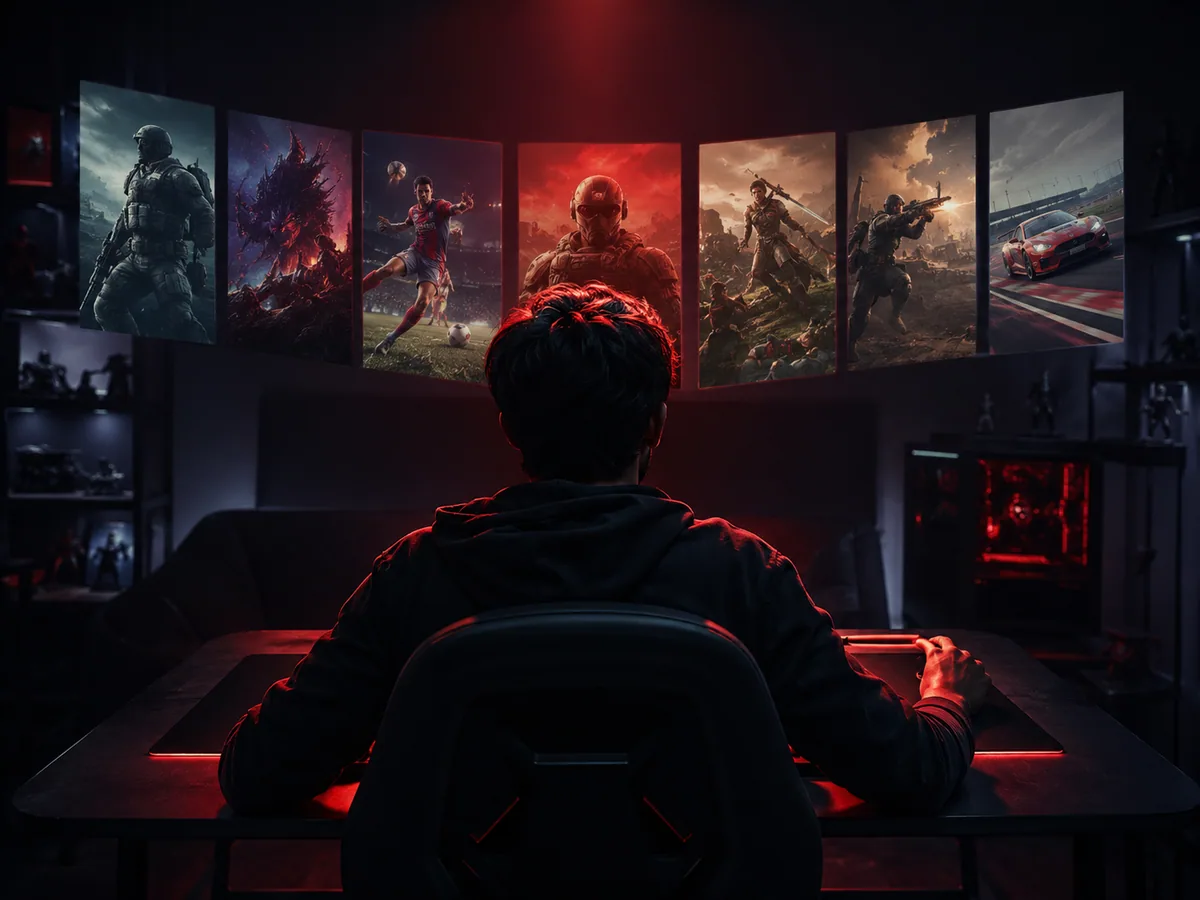
Once you've chosen your game, commit fully. Give yourself at least 3-6 months of consistent, focused practice before evaluating whether you've made progress. Understanding how to start competitive gaming means accepting that this is a long-term commitment requiring patience.
Build an Unshakeable Foundation of Fundamentals
After choosing your game, the most critical phase of how to start competitive gaming is establishing rock-solid fundamentals. Advanced strategies and complex plays mean nothing if your foundational skills are weak. This is where most aspiring competitive players either separate from the pack or plateau.
For FPS Games: Fundamentals include crosshair placement, recoil control, positioning, and map awareness. Spend 30-45 minutes daily on aim trainers like Aim Lab or Kovaak's. Practice pre-aiming common angles, controlling weapon recoil, and maintaining proper crosshair placement at head level. These aren't exciting activities, but they're the difference between competitive and casual play.
For MOBAs: Fundamentals include last-hitting (securing kill credits on minions), map awareness, warding, and understanding your champion's abilities. Dedicate time to practicing last-hitting in practice tool modes until you can consistently achieve high minion scores without enemy interference. Learn which areas of the map provide vision and why proper warding matters strategically.
For All Games: Understand core mechanics thoroughly. Read patch notes, learn abilities and cooldowns, understand economy systems, and grasp game objectives. Create a learning framework where you systematically study every aspect of your game's mechanics rather than randomly grinding ranked matches.
The fundamental phase typically lasts 100-200 hours depending on your starting skill level. Resist the urge to jump into ranked matches before you're ready. Smurfing accounts or practicing in unranked modes allows you to develop fundamentals without the pressure and toxicity of ranked environments.
Study Professional Players and Content Creators
Learning how to start competitive gaming accelerates dramatically when you study those already at the top. Professional players and high-ranked streamers have already solved countless problems you'll encounter. Instead of struggling through trial-and-error, you can learn from their experience.
Watch Strategically: Don't passively watch streams. Take notes on positioning decisions, ability usage timing, and map rotations. Pause videos to understand why a player made a particular choice. Many pros actively explain their reasoning on stream or in educational content.
Study Multiple Players: Different professionals have different styles. Watching multiple top players shows you the range of viable approaches and helps you understand principles versus personal preference.
Follow Educational Channels: Beyond pro streams, countless content creators produce educational material specifically designed for improvement. Channels focused on guides, replay analysis, and strategy accelerate learning faster than watching entertainment-focused streams.
Understand Meta Evolution: Competitive games constantly change through patches and updates. Understanding the current meta - which strategies, characters, and items are most effective - is essential for staying relevant. Follow patch notes and pro team discussions to understand what's changed and why.
Allocate 20-30% of your gaming time to watching and studying rather than playing. This might feel inefficient, but it compounds into massive advantages over months of practice.
Develop the Mental Framework and Habits for Competitive Success
Technical skills and game knowledge matter, but the mental side of competitive gaming determines whether players reach their potential or plateau. How you approach practice, handle failure, and maintain focus separates competitive players from casuals.
Practice with Purpose: Most players grind ranked matches, but ranked play isn't structured practice. Instead, identify specific weaknesses and focus practice sessions on improving them. Are your team fights poor? Scrim against other teams. Is your positioning bad? Review replays and consciously adjust. Is your decision-making inconsistent? Play custom games focusing on decision-making rather than mechanical performance.
Review Your Replays Obsessively: Every match you play contains lessons. Professional players review their losses in detail, identifying moments where better decisions or execution would have changed outcomes. Dedicate 15-30 minutes after ranked sessions reviewing key moments and understanding what you could improve.

Manage Tilt and Mentality: Competitive gaming is emotionally intense. Losing streaks, unfair teammates, and frustrating moments will test your patience. Develop mental strategies for staying composed: take breaks when frustrated, maintain perspective about long-term improvement rather than individual games, and focus on controllable factors rather than teammates' mistakes.
Establish Training Routines: Successful competitive gamers treat gaming like professional athletes treat sports. Warm up before ranked sessions with aim trainers or practice modes. Many pros spend 15-30 minutes warming up before competing. This primes your mechanical skills and mental focus.
Maintain Physical Health: Your body directly impacts gaming performance. Proper sleep, nutrition, hydration, and exercise improve focus, reaction time, and decision-making. Professional esports teams employ nutritionists and fitness coaches - the competitive advantage of physical health is that significant. At minimum, exercise regularly, maintain consistent sleep schedules, and eat nutritious food.
Find Your Community: For team-based games, finding consistent teammates dramatically improves your competitive trajectory. Playing with the same people develops chemistry, communication patterns, and strategic cohesion impossible with random teammates. Communities like Discord servers and forums connect aspiring competitive players for team formation.
Structure Your Competitive Gaming Journey
Knowing how to start competitive gaming means having a clear progression path. Rather than aimlessly grinding ranked matches, structure your improvement through distinct phases:
Phase 1: Foundation Building (Months 1-3): Focus entirely on fundamentals in unranked modes. Your goal is reaching a basic competency level before ranked competition. Spend 60-70% of time on mechanics practice, 20% watching educational content, and 10% casual ranked play.
Phase 2: Ranked Climbing (Months 3-6): Begin serious ranked play as your primary focus. You should understand fundamentals well enough that ranked matches become legitimate practice. Allocate 60% to ranked play, 25% to replay review and studying, and 15% to mechanics practice.
Phase 3: Competitive Integration (Months 6-12): Start participating in tournaments, community competitions, or scrim matches against other organized teams. Competitive matches create pressure and situations ranked can't replicate. Time allocation shifts to 50% tournament/scrim preparation, 30% ranked play, and 20% review and study.
Phase 4: Advanced Specialization (Months 12+): At this stage, you should have genuine skill and understand your game deeply. Specialization becomes possible - focusing on specific roles, positions, or playstyles where you can achieve exceptional depth.
This timeline isn't absolute - some players progress faster, others need more time. However, expecting to compete seriously in less than 3-6 months of dedicated practice is unrealistic.
Practical Tips for Starting Competitive Gaming
Invest in Basic Equipment: You don't need the most expensive gear, but decent equipment matters. A reliable internet connection, responsive mouse and keyboard for FPS games, and a monitor with decent refresh rate remove performance limitations. Cheap equipment can introduce mechanical disadvantages you don't need.
Create a Distraction-Free Environment: Competitive gaming requires intense focus. Minimize notifications, silence your phone, and ensure your gaming space is optimized for concentration. Professionals protect their practice time seriously.
Track Your Progress Systematically: Keep records of your ranked rating, win rates, and specific metrics relevant to your game. This data reveals whether you're actually improving or spinning your wheels. Spreadsheets, tracker websites, and streaming VOD libraries create concrete improvement evidence.
Don't Compare Your Chapter 1 to Someone Else's Chapter 20: Competitive players comparing themselves to pros with years of experience often feel discouraged. Remember that professionals have invested thousands of hours. Focus on comparing yourself to your past performance.
Embrace Losses as Data: Professional players view losses as valuable information, not ego threats. Every loss reveals something about your gameplay or game understanding that needs improvement. This mindset shift transforms losses from frustrating into educational.
Frequently Asked Questions
How long does it take to become competitive?
Most players need 3-6 months of consistent, focused practice to reach a competitive level where tournament participation is realistic. However, "competitive" varies by game and scene. Reaching semi-professional levels typically requires 1-2 years of dedicated practice. Professional levels demand multiple years. The timeline depends entirely on your dedication, natural aptitude, and game choice.
Do I need expensive equipment to get into competitive gaming?
Professional-grade equipment can provide small advantages, but fundamentals matter infinitely more than gear. A player with excellent fundamentals and basic equipment beats a player with poor fundamentals and expensive equipment. Invest in basic quality equipment that doesn't introduce mechanical problems, then focus spending on improving your skills through practice and education.
Pro Tips from the Digidang Team
Based on the Digidang team's experience handling thousands of gaming transactions every month since 2020, here are the tips we share most often with our loyal customers.
- Read all the steps before starting: Many tutorials fail because users jump to step 5 without reading 1-4. Get the full picture first, then execute.
- Screenshot every important step: For processes with many menus (account settings, redeeming codes), screenshots make troubleshooting much easier if something errors out.
- Test on a secondary account first: When in doubt, try the process on a backup account before applying it to your main, especially for account modifications, linking new accounts, or redeeming large codes.
- Log the execution date: A simple tracker in Notion or Excel helps you remember when you redeemed a code or changed an email. It makes support disputes much smoother later.
- Update your browser or app first: Many redemption and login issues happen because the app or browser is outdated. Update to the latest version before retrying.
Why Buy Gaming Products at Digidang
As a digital gaming marketplace operating since 2020, Digidang is built by and for Indonesian gamers. Here's why thousands of gamers trust Digidang for their top-up and gift card needs:
- Competitive pricing: We continuously monitor other marketplace prices and adjust so you always get the best deal without hidden cost drama.
- Instant automated process: Digital codes arrive in your inbox in minutes, not hours or days. We know gamers want to play right away.
- 24/7 customer service: Our support team is ready to respond via WhatsApp and email anytime. Not a bot - you chat with humans who understand gaming.
- Safe and trustworthy: Payments are processed via official payment gateways (Midtrans, Xendit), not personal transfers. Your data is protected with 256-bit SSL encryption.
- Complete product variety: From Mobile Legends, PUBG, Genshin Impact top-ups, to Steam, Roblox, PlayStation gift cards - all available on one platform.
- Active community: Digidang has an active Discord and Instagram community sharing tips, builds, and discussions about Indonesian gaming.
Check the Digidang catalog to see all available gaming products, or visit our about page to learn more about Digidang's mission to build a healthy Indonesian gaming ecosystem.
Conclusion & Key Takeaways
How to Get Into Competitive Gaming: A Complete Roadmap isn't a static gaming topic - it evolves quickly with new game releases, publisher updates, and trends in the Indonesian gaming community. The Digidang team will continue to update this article to keep it relevant to current conditions.
Key points to remember from this guide:
- Always prioritize account security: Enable 2FA, never share passwords, and avoid buying from untrusted sellers.
- Compare prices across multiple sources: Even though Digidang offers competitive pricing, the habit of comparing before buying is a healthy behavior.
- Take advantage of events and promotions: Significant savings come from combining Digidang discounts with publisher in-game events.
- Verify every transaction detail: User ID, region, and denomination - small mistakes can lead to non-refundable losses.
- Use Digidang's support: Our customer service is active 24/7 via WhatsApp and email. Don't hesitate to reach out with any questions.
Have more questions? Check the FAQ section below, or contact the Digidang team directly via WhatsApp for free consultation on the gaming products you need.
David Chen
Gaming enthusiast and marketplace expert sharing tips, guides, and the best gaming deals.