AAA vs Indie Games: Key Differences and How to Choose
AAA versus indie games mainly compares production scale and creative independence, not guaranteed quality. AAA usually describes large commercial productions; indie describes independently developed projects that may still work with publishers. To choose between them, compare actual gameplay, price, hardware requirements, and reviews rather than treating either label as a quality certificate.
What does the AAA game label mean?
A AAA game is an informal label for a large commercial production, usually supported by substantial development and marketing resources. It is not an official quality grade or a fixed budget threshold. AAA describes the project’s production scale; it does not guarantee realistic graphics, an open world, technical polish, or a particular playing time.
Because of that scale, AAA titles tend to deliver cutting edge graphics, large open worlds, full voice acting, orchestral soundtracks, and polished gameplay tested by big quality assurance teams. Many large productions aim for a broad audience, although audience size and genre ambitions differ by project. The trade off is that the high cost can make studios cautious, which sometimes leads to safer, more familiar designs rather than bold experiments.
What is an indie game?
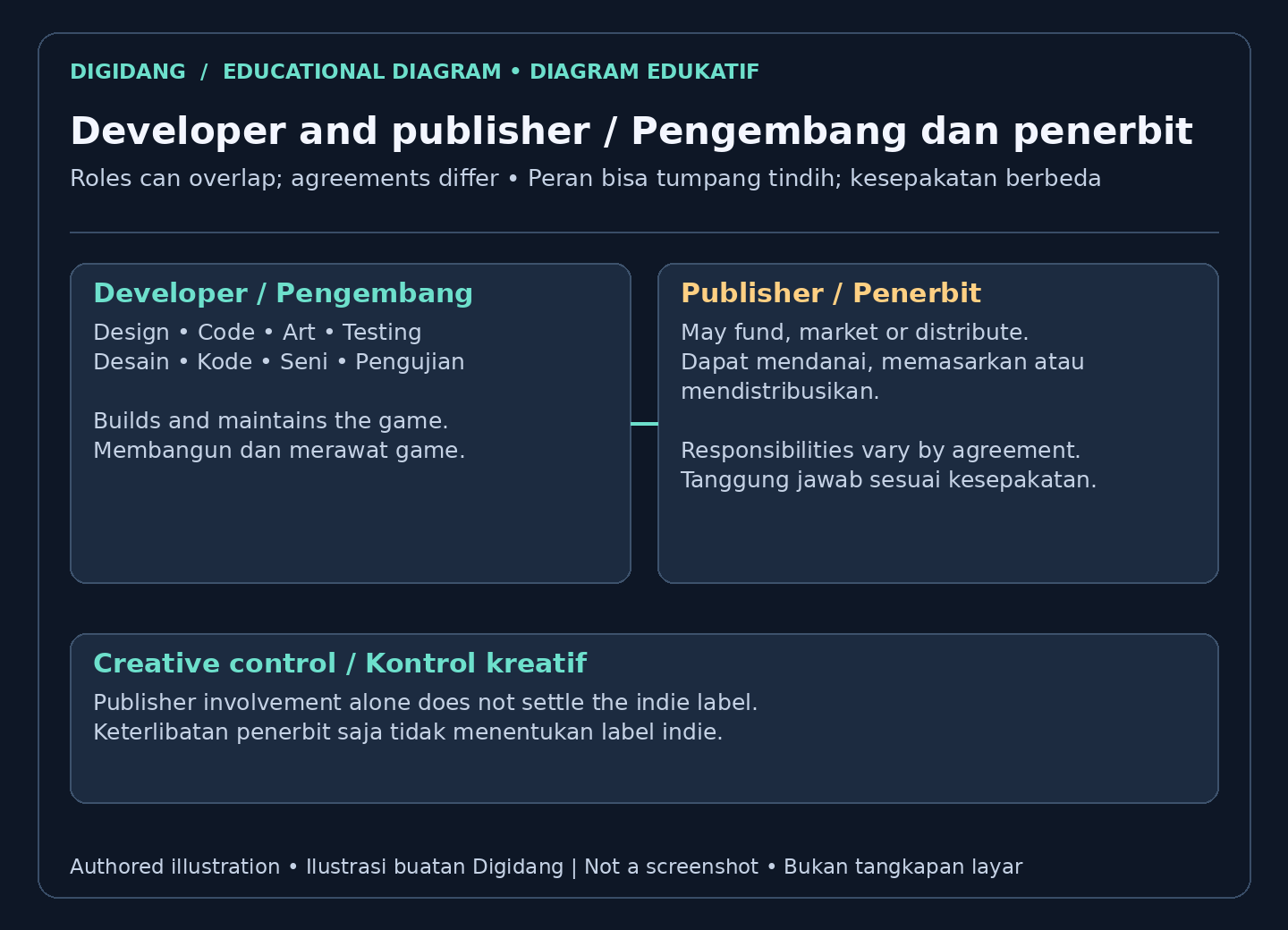
An indie game is an independently developed project, often associated with creative control and a smaller production structure. Publisher involvement does not automatically settle the label. Stardew Valley’s official press page describes Eric Barone’s solo development and later update team, illustrating why a game’s original development history differs from its ongoing staffing.
With smaller budgets, indie developers cannot always compete on graphics or sheer size, so they compete on ideas. Many of the most original mechanics, art styles, and stories in gaming have come from indie teams who were free to take chances. Because they answer mainly to themselves and their players, indie developers often explore niche genres, unusual themes, and personal stories that a giant studio might consider too risky.
How do AAA and indie budgets and teams differ?
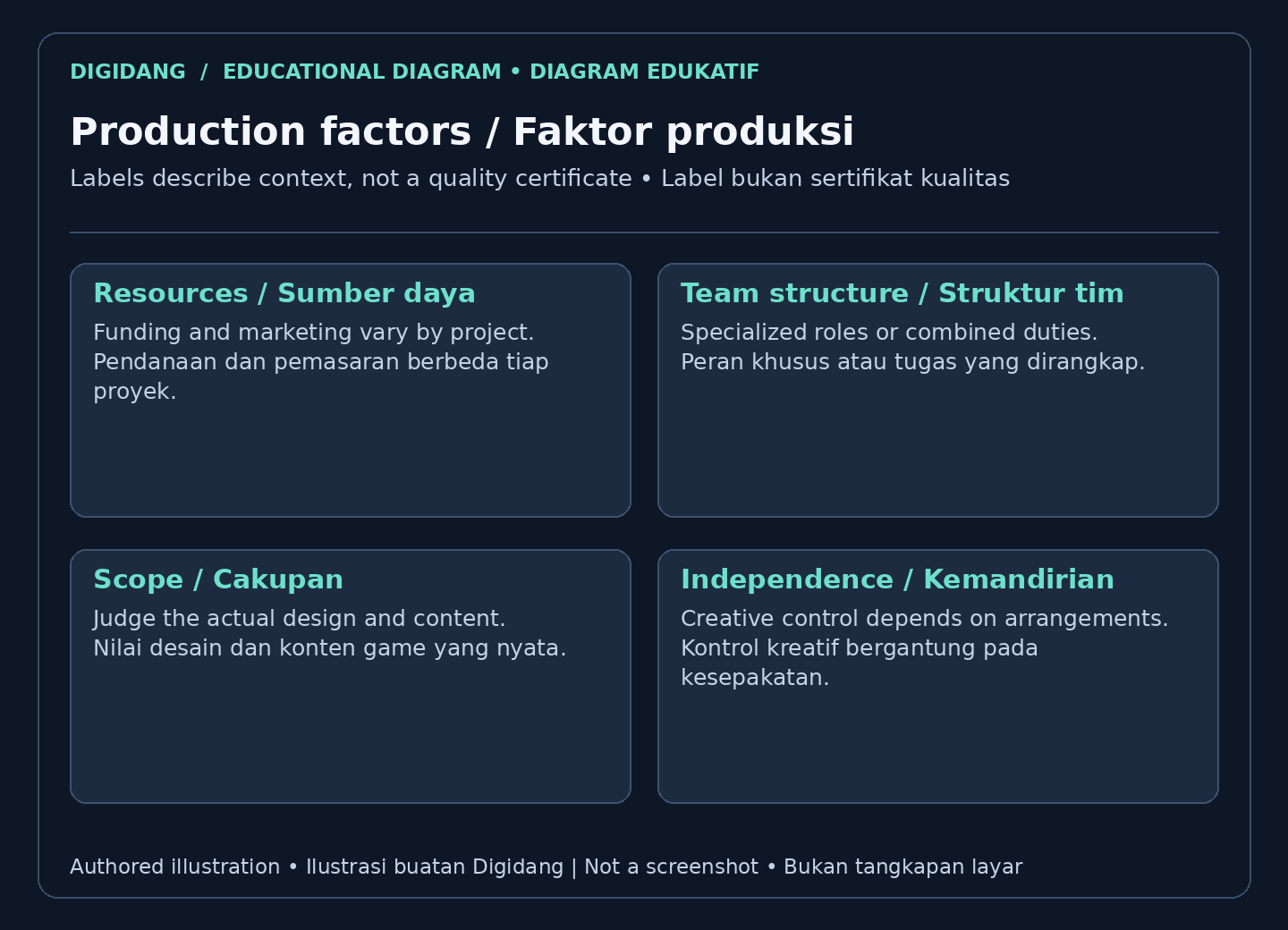
AAA and indie budgets and teams differ by project, with large productions generally supporting more specialized roles and independent teams often combining responsibilities. There is no universal budget or headcount boundary between the labels. Compare documented studio information where available, and avoid inferring development cost, staffing, or completion time from graphics or a store category.
An indie game runs on a fraction of that. Small teams wear many hats, with one person sometimes handling art, code, and sound at once. Budgets are far smaller, and development can be faster or slower depending on the team. This lean setup is a limitation, but it also makes indie studios nimble, able to pivot ideas quickly without layers of approval slowing them down.
Do graphics and scale determine creativity or quality?
Graphics and scale do not determine a game’s creativity or quality. Large productions can support detailed environments and performances, while smaller teams may choose stylized visuals or a focused design. Both can experiment and both can feel familiar. Judge the mechanics, accessibility, storytelling, and technical performance of the particular release rather than its production label.
Indie games shine in a different way. Instead of chasing photorealism, they often embrace stylized or pixel art that ages gracefully and gives each game a distinct look. More importantly, indie teams have the freedom to experiment with fresh mechanics and storytelling that bigger studios might avoid. Independent releases are worth exploring for unusual ideas, but originality is not exclusive to smaller studios.
Are indie games always cheaper than AAA games?
Indie games are not always cheaper than AAA games. The price you pay depends on region, edition, discounts, platform, and any additional purchases. Smaller releases often offer a lower entry price, but an older discounted blockbuster may cost less. Compare current official listings and included content rather than assuming the labels define your final bill.
Indie games are usually much more affordable. Many launch at a budget friendly price, and some are even free or pay what you want. This lower cost makes it easy to try several indie titles for the price of a single AAA release. For players on a tight budget, indie games offer an excellent way to discover lots of variety without spending much, while still finding deeply rewarding experiences.
What are the practical advantages and risks of each?
The practical advantages and risks of AAA and indie games depend on the specific release. Large teams may deliver extensive production assets, while independent teams may offer focused or distinctive ideas. Either can have bugs, limited accessibility, or uncertain updates. Use the labels as background, then check recent reviews, demonstrations, and developer support information.
- AAA strengths. Stunning graphics, large worlds, polished gameplay, full voice acting, potentially extensive post-launch support, depending on the developer, and familiar high quality experiences.
- AAA weaknesses. Higher price, demanding hardware requirements, occasional sequel fatigue, and sometimes safer designs that avoid taking risks.
- Indie strengths. Lower price, bold creativity, unique art and stories, fresh mechanics, and strong value for money.
- Indie weaknesses. Smaller scope, simpler visuals, less marketing so they can be harder to find, and occasional rough edges from small teams.
Why can independent development encourage experimentation?
Independent development can encourage experimentation when creators retain control over their design and can pursue a focused audience. That freedom is not universal: funding, deadlines, and commercial pressures still matter. AAA teams can also innovate. Look for distinctive mechanics and actual design decisions rather than assuming every independent game is experimental or every blockbuster is cautious.
This freedom also lets indie creators tell personal, emotional, or experimental stories that would be hard to greenlight at a giant company. Experimentation still carries financial and personal risks for an independent team. Over time, the best of these experiments influence the whole industry, so indie games act as a testing ground for the gameplay and themes that later show up everywhere.
What does the AA middle ground mean?
AA is another informal label, commonly used for productions positioned between small projects and large blockbusters. It has no universal certification, budget boundary, or required studio size. A AA description can help discuss production scope, but it does not establish quality, independence, pricing, or hardware requirements. Inspect the actual game before drawing those conclusions.
You will often find AA games offering solid production values, focused gameplay, and a fair price that lands between budget indie titles and full price AAA releases. They prove that the line between these groups is not strict, and that great games exist all along the spectrum. If you enjoy ambitious ideas with a bit more polish than the smallest indie projects, AA games are well worth exploring.
How should you choose between AAA and indie games?
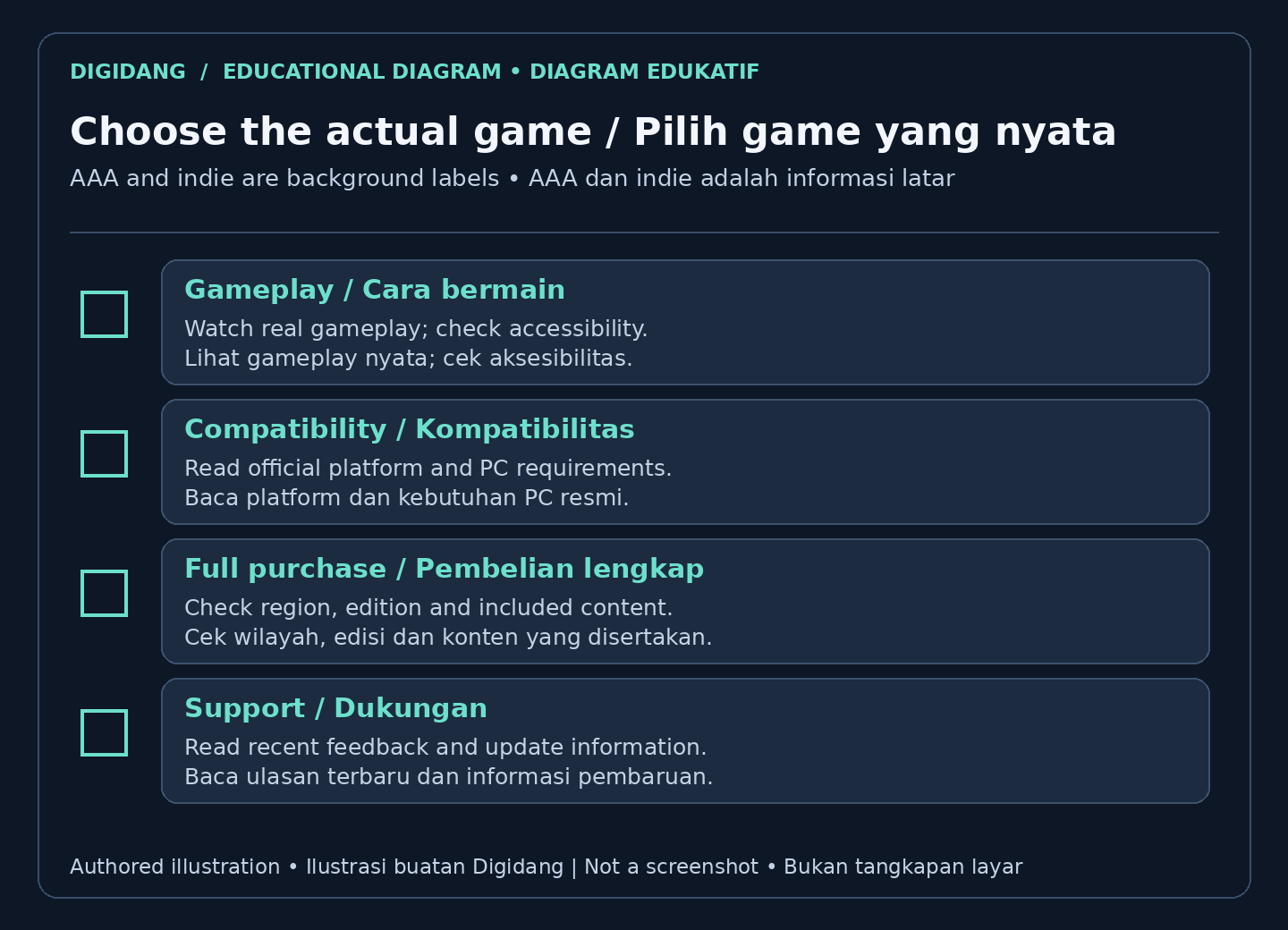
Choosing between AAA and indie games starts with the experience you want, not a studio label. Compare gameplay footage, system requirements, accessibility options, and the complete price. Check current player feedback and official support details. A mixed library can suit different moods and budgets, and neither category guarantees a better purchase for every player.
If you value fresh ideas, unique art, and getting the most variety for your money, indie games are a brilliant fit. Players on a tight budget can build a large, diverse library of indie titles for the cost of a few AAA games. In truth, you do not have to choose only one. Mixing big blockbusters with small creative gems gives you the best of both, so blend them based on your mood, your time, and your spending plan.
Stardew Valley offers a documented example rather than a universal indie template. Its official press page says Eric Barone developed the original game alone over four years and later formed a small team for updates. Its official Steam listing supplies current game information and system requirements; check those details instead of assuming all indie titles have similar demands.
How do AAA, AA, and indie games compare factor by factor?
This table brings the differences discussed above into one place. It shows general tendencies, not rules: every column has exceptions, so use it as a checklist when you open a game's store page, then compare it with the actual release information.
| Factor | AAA | AA | Indie |
|---|---|---|---|
| Production scale | Large commercial production with many specialized roles | Mid scale, between small projects and blockbusters | Independent project, often with a small team sharing roles |
| Creative control | Shaped by many stakeholders and a broad target market | Varies by studio and publisher | Tends to stay with the creators, although publishers may be involved |
| Visuals | Often pursues high detail and large scale | Varied, often more focused | Often stylized or simple |
| Price | Often launches at full price, then may drop during sales | Usually somewhere in between | Often lower, but not always |
| Hardware needs | Often demanding; read the system requirements | Varies by title | Often lighter, but still check |
| Common risks | Overly safe design or technical problems at launch | Uneven polish | Smaller scope, harder to discover, support depends on the team |
| What to check | Recent reviews, edition contents, and download size | Gameplay footage and reviews | Release status, reviews, and supported languages |
Keep in mind that store labels do not always come from a neutral party. Steam's Steam Tags documentation for developers explains that developers choose tags for their games, customers can also add tags, and developers can remove tags they find unwanted or inaccurate. A tag like indie helps with search, but it is not a certificate of studio size, budget, or quality.
What should you check before buying an AAA or indie game?
Start with the release status. Some games, especially from small teams, are sold while they are still in development. Steam's Early Access documentation explains that the program lets developers sell a game that is still being developed while giving buyers context that the product should be considered unfinished. Buying an Early Access game means you are judging the version you can play today, not a promise of future features.
Next, check language support. Steam store pages show a language table that separates interface, full audio, and subtitles, as you can see on the Stardew Valley Steam page. For players who prefer reading in Indonesian or another language, this table matters for text heavy games, AAA and indie alike, because language support is not determined by the size of the studio.
Then match the game to your hardware and connection. Big productions often require large downloads and plenty of storage space, so players with a limited data allowance should account for that from the start. Indie games are often lighter, but their system requirements still need to be read title by title rather than guessed from the art style.
The most common mistakes are buying based on a trailer alone, picking a deluxe edition without checking what the extras contain, and buying a code for the wrong platform. Digital game codes are tied to a specific store or launcher, so match the platform on the listing to your account; the game key activation guide and the article on buying cheap digital games safely walk through the steps. Remember too that Steam's refund policy states Valve cannot provide refunds for CD keys purchased from third parties, so checking before you buy matters far more than hoping to return it later.
As an example of how to decide: if your play time comes in short breaks between work or classes, an indie game built around short sessions often fits better than a huge adventure that demands hours of focus. If you are waiting for one big title that your friends are all playing, buying that AAA game on sale can make more sense than buying several small games that end up untouched. Whichever you choose, compare prices from several sellers before buying; Digidang compares game code prices from third party sellers so you can see the difference before you are sent to the store that handles the transaction.
FAQ
What does AAA mean in gaming?
AAA, said as triple A, is an informal label for games made with very large budgets, big teams, and high production values. It signals blockbuster scale rather than a fixed certification.
Are indie games worse than AAA games?
No. Indie games are independently developed; team size and funding vary. Many indie titles are highly praised for creativity, fun, and value, and some rival or surpass AAA games in quality.
Why are AAA games more expensive than indie games?
AAA games cost far more to make and market, with huge teams and long development cycles, so they launch at full price to recover that investment. Indie prices vary too; compare the actual edition and regional price.
What is a AA game?
A AA, or double A, game comes from a mid sized studio. It has more resources than a small indie team but a smaller budget than a AAA blockbuster, blending polish with creative freedom.
Do indie games run on low end computers?
Often yes. Many indie games use simpler or stylized graphics, so they tend to run well on modest hardware. Always check the listed requirements before buying to be sure.
Should I buy AAA or indie games on a budget?
On a tight budget, indie games give the most variety for your money, and many go on sale or are very cheap. You can also wait for AAA titles to drop in price during sales.
Can indie games be as big as AAA games?
Usually they are smaller in scope, but some indie hits grow surprisingly large through updates and success. Their strength is depth and creativity rather than raw size.
Digidang Team
Gaming enthusiast and marketplace expert sharing tips, guides, and the best gaming deals.