Digital Games vs Physical Games: Differences, Pros and Cons
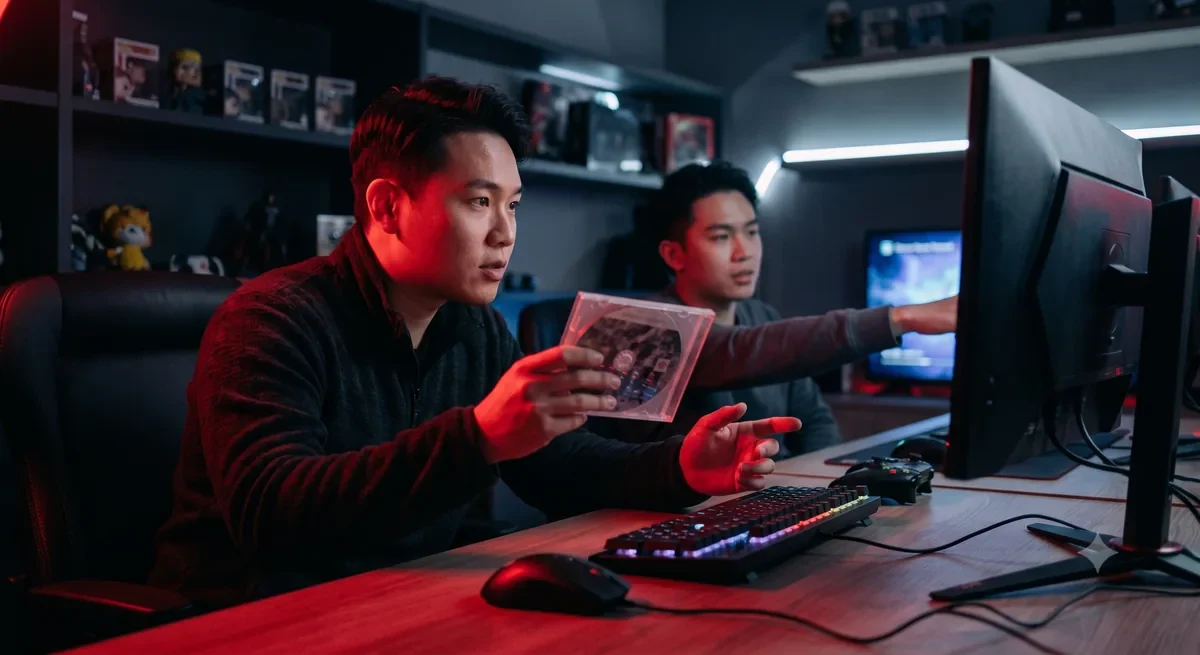
The difference between digital games and physical games is how you receive and own them: a digital game is downloaded through a store like Steam, PlayStation Store, Xbox, or Nintendo eShop and tied to your account, while a physical game comes on a disc or cartridge that you can hold, lend, or resell.
Both formats let you play the same titles, but each one shapes your buying habits, your shelf space, and how much you depend on the internet. This guide breaks down every major difference so you can decide which path fits your gaming life.
What Is a Digital Game?
A digital game is a title you buy as a download instead of a disc or cartridge. You receive a license tied to your account on a store such as Steam, PlayStation Store, Xbox, or Nintendo eShop, and Valve's Steam Subscriber Agreement, for example, states that content is licensed, not sold.
The game files are downloaded to your device, and you launch them straight from your library. Some games also come as a code or key that you redeem into your account, which is common when you buy from authorized resellers and marketplaces.
Because everything lives on your account, you can reinstall a digital game any time without hunting for a disc. The catch is that you do not hold a physical copy, so your access depends on the platform and your login. For many players the convenience outweighs that trade-off, especially when storage is cheap and internet is reliable.
What Is a Physical Game
A physical game is the traditional format: a disc, cartridge, or boxed copy you can hold, lend, or place on a shelf. You buy it in a store or online, then install or insert it to play. On PlayStation and Xbox consoles, even a disc usually installs a large chunk of data to the internal drive, and many titles still need patches downloaded after the first launch. So the disc is partly a delivery method and partly proof that you own the copy.
The big appeal of physical games is tangibility. You can resell them, trade them with friends, or keep them as collectibles. Special editions with art books, figures, and steelbook cases are only available in physical form, which makes them a favorite among collectors who value the object as much as the game inside it.
Price and Discounts
Pricing behaves differently across the two formats. Digital stores run frequent seasonal sales, flash deals, and bundle offers, and older titles often drop sharply once they have been out for a while. Buying a digital code from a trusted reseller can also unlock savings compared to the standard store price. The downside is that brand new releases sometimes stay at full price longer on digital storefronts.
Physical games can be cheaper at launch through retailer promotions, and the used market gives you a way to buy popular titles below their original cost. You can also recover some money later by reselling a finished game, something digital purchases do not allow. The catch is that physical deals depend on stock and location, while digital deals are available to anyone with an account.
Ownership and Resale
Ownership is one of the clearest dividing lines between the formats. When you buy a physical game, you own that specific copy. You can sell it, gift it, or lend it to a friend, and the second hand market is built around this freedom. The copy is yours to move around as you please, as long as the disc or cartridge stays in good condition.
Digital games work on a license model. You are granted the right to play, but the copy stays bound to your account and generally cannot be resold or transferred. Steam's agreement, for instance, says your license "confers no title or ownership" in the content (Steam Subscriber Agreement, section 2). For most players this is fine, since the library is always there when they log in. Still, if reselling matters to you, physical remains the only format that supports it cleanly.
Storage Space and Library Management
Storage is a practical concern that favors different formats depending on your setup. Digital libraries can grow huge, and large modern games take up plenty of drive space, so heavy digital buyers may need to upgrade their internal or external storage. The upside is that there is no clutter in your room, and your whole collection sits neatly inside one menu.
Physical games shift some of that burden onto a shelf instead of a drive, but remember that discs still install data locally on current consoles. So you do not fully escape storage limits with physical copies. Where physical wins is letting you delete an installed game to free space and reinstall later from the disc, which can save bandwidth if your connection is slow.
Install Speed and Access
How quickly you can start playing depends on your connection and your format. With digital games, you buy and download instantly from anywhere, even at midnight on release day, but the download size determines the wait. On a fast connection this is a non issue, while on a slow line a large game can take hours before you press play.
Physical games let you start installing the moment the disc is in the tray, which can be faster than downloading a huge file on a weak connection. However, day one patches and updates often still need to come over the internet, so you are rarely fully offline even with a disc. For pure speed, the best format depends entirely on your download speed versus your local install speed.
Internet Requirements
Your connection plays a bigger role with digital games. You need internet to download purchases, install updates, and sometimes verify your library, although many single player digital games can be played offline once installed and the platform is set up correctly. If your internet is unstable or capped, frequent large downloads can become a real burden.
Physical games reduce, but do not remove, the need for a connection. The base game installs from the disc, yet patches, multiplayer features, and online services still require internet. So neither format is truly internet free today. The difference is that physical buyers can at least install the core game without downloading the entire title first.
Collections: Physical vs Digital
Collecting feels very different in each format. A physical collection is visible and tactile. You can line up boxes on a shelf, display special editions, and pass favorites down over the years. For many fans, owning the object is part of the hobby, and a well kept shelf becomes a personal museum of gaming memories.
A digital collection is invisible but effortless. Everything is searchable, sorted, and ready to launch with one click, and nothing gets scratched or lost behind a couch. You cannot show it off on a shelf, yet you also never deal with damaged cases or missing discs. Whether you prefer a glass cabinet or a tidy library menu is mostly a matter of taste.
Pros and Cons of Each Format
- Digital pros. Instant access, frequent sales, no clutter, easy reinstalls, and play across multiple devices on one account.
- Digital cons. No resale, license based ownership, large downloads, and reliance on your account and internet.
- Physical pros. True ownership, resale and lending, collectible editions, and the ability to install without a full download.
- Physical cons. Shelf space, possible damage or loss, stock limits, and patches still need internet.
Which Format Suits Who
The right choice depends on how and where you play. Digital is ideal for players who value convenience, hunt for sales, own several devices, and have solid internet. If you rarely resell games and enjoy a clean, organized library you can reach instantly, going mostly digital makes life simple. It also suits travelers and handheld owners who want their whole collection in their pocket.
Physical is the better fit for collectors, players with slow or capped internet, and anyone who wants the freedom to resell or lend titles. If you love special editions, treasure the feeling of owning a copy, or share games within a household, discs and cartridges keep that flexibility alive. Many gamers happily mix both, going digital for convenience and physical for the titles they want to keep forever.
Future Trends
The industry is steadily leaning toward digital. New consoles increasingly offer disc free versions, more publishers push download first releases, and cloud and subscription services let you stream or access libraries without owning a single copy. These shifts make digital the default for a growing number of players, especially as internet speeds keep improving worldwide.
Even so, physical media is not vanishing overnight. Collectors keep demand alive, certain regions still prefer discs due to internet limits, and limited editions remain a strong market. The likely future is a hybrid one where most everyday buying happens digitally, while physical copies survive as premium collectibles and a backup for players who want guaranteed offline access. Understanding both formats now helps you make smart choices as that landscape evolves.
FAQ
Are digital games cheaper than physical games?
It depends on timing. Digital games often drop through frequent sales and bundles, while physical games can be cheaper at launch or on the used market. Compare both before buying, since the best deal varies by title and season.
Can I resell a digital game?
Generally no. Digital purchases are licensed to your account and cannot be transferred or resold. If reselling matters to you, a physical copy is the only format that lets you do it.
Do physical games still need an internet connection?
Often yes. The base game installs from the disc, but day one patches, updates, and online features usually require internet. Physical reduces downloads but does not make a game fully offline by default.
Which format saves more storage space?
Neither is clearly better, because modern discs still install large data to your drive. Digital saves shelf space but uses more bandwidth, while physical can let you delete and reinstall from the disc to manage your drive.
Is a digital game gone if my account is lost?
Access depends on your account and the platform, so keeping your account secure matters. Use strong passwords and two step verification. A physical copy, by contrast, stays playable as long as the disc is intact.
Should beginners choose digital or physical?
Beginners with reliable internet usually find digital easier, since it offers instant access and simple reinstalls. Players with slow connections, a love of collecting, or a desire to resell may prefer physical copies instead.
Digidang Team
Gaming enthusiast and marketplace expert sharing tips, guides, and the best gaming deals.