What Is Capture the Flag Mode in Games and How It Works
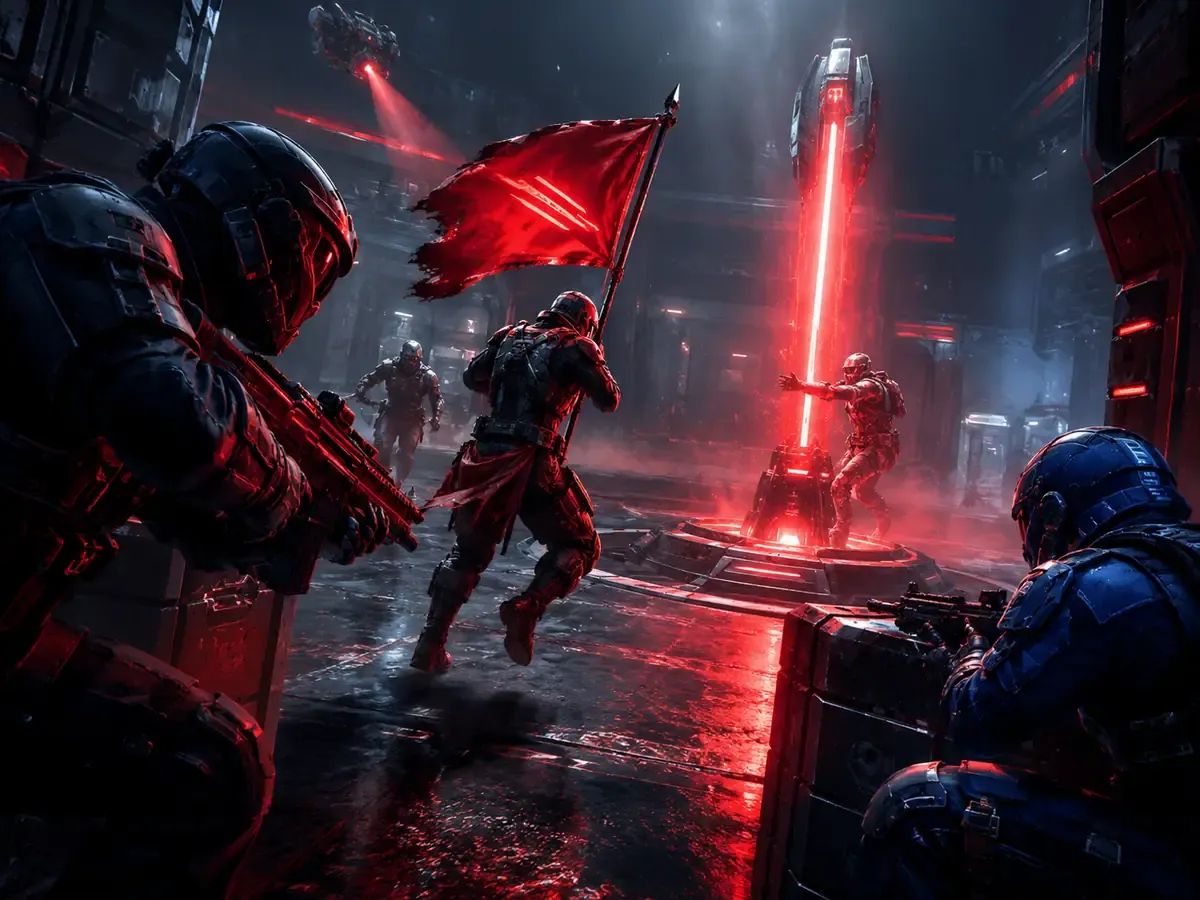
Capture the flag (CTF) is a team objective mode where players sneak into the enemy base, grab their flag, and carry it home to score, all while defending their own flag from the other team. Borrowed from the classic outdoor game, CTF rewards coordination and map control over simple kills, and remains a staple across shooters and arena games.
Where Does Capture the Flag Come From?
Capture the flag as a video game mode is adapted directly from the real world outdoor game of the same name, documented in Wikipedia's overview of the format, where two teams try to steal each other's flag and carry it home. Games simply moved that same tug of war onto digital maps, bases, and respawns.
The Basic Rules of Capture the Flag
At its core, capture the flag pits two teams against each other on a symmetrical map. Each team has a base, and each base holds a flag. To score a point, a player must travel into the enemy base, pick up the enemy flag, and carry it all the way back to their own base. In most rule sets, the capture only counts if your own flag is safely at home when you arrive with the enemy flag, which creates a constant tug of war between attacking and defending.
The match is usually won by the first team to reach a set number of captures or by whichever team has the most captures when a time limit expires. Because the objective sits in plain sight at a fixed location, both teams always know roughly where the action will happen, yet the route the flag carrier takes home and the moment they make a run for it stay unpredictable. That blend of a clear goal with flexible execution is what gives the mode its lasting appeal.
Flags, Carriers, and the Return Mechanic
The flag is the heart of the mode, and how it behaves shapes everything else. When a player picks up the enemy flag, they become the flag carrier, a high value target the whole enemy team will hunt. Carriers are usually slowed or otherwise made vulnerable so that escaping with the flag is a genuine challenge rather than a simple sprint. If the carrier is taken down before reaching home, they drop the flag where they fall.
What happens to a dropped flag is one of the most important rules to learn. In many games, a dropped enemy flag can be picked up again by either side. If a teammate of the carrier grabs it, the run continues from that spot, while if a defender touches it, the flag instantly returns to its home base. This return mechanic is the defenders' main reset button, and understanding when a flag will reset versus when it stays in play is essential to reading the flow of a match.
Offense and Defense Roles
Because the objective pulls players in two directions, most teams naturally split into offense and defense. The offense pushes toward the enemy base to steal the flag, while the defense stays home to protect their own flag and stop enemy carriers from scoring. A team that sends everyone forward leaves its flag wide open, and a team that turtles up on defense never scores, so balance is everything. Good teams shift the ratio of attackers to defenders depending on the score, the map, and what the enemy is doing.
Within offense, players often specialize further. Some act as the dedicated flag runner whose only job is to grab and carry, relying on teammates for protection. Others play escort, clearing the path ahead and behind the carrier and body blocking incoming fire. On defense, players guard chokepoints near their own flag, watch the routes a carrier is likely to use, and chase down anyone who slips through. These soft roles are rarely fixed, and players swap between them on the fly as the situation changes.
The Role of the Flag Carrier
Carrying the flag is the most pressure filled job in the mode. The moment you grab it, every enemy on the map knows your location, and many games even display the carrier's position to the opposing team. A skilled carrier does not just run in a straight line. They use cover, take unexpected routes, and time their movement around teammate pushes so they are never alone in the open. Patience often beats speed, since waiting for an escort or a distraction can turn a doomed run into a clean capture.
The carrier also has to balance risk and reward. Holding a flag too long without progress lets the enemy organize and trap you, while rushing recklessly hands them an easy interception and a flag reset. The best carriers read the map constantly, calling for help when the path is blocked and breaking for home the instant a lane opens. Teams that protect their carrier well and time their captures around enemy mistakes are the ones that win close games.
Why Map Design Matters So Much
Capture the flag lives and dies by its maps, more so than almost any other mode. A good CTF map is symmetrical so neither team has an unfair starting advantage, and it offers multiple routes between the bases so the flag carrier has real choices rather than a single predictable corridor. Open lanes reward fast, aggressive runs, while tight corridors and verticality favor ambushes and careful escorting.
The distance between bases sets the entire pace of a match. Short maps create frantic, high scoring games where flags change hands constantly, while long maps slow things down and put a premium on coordinated pushes and patient defense. Sightlines, cover, and the placement of power positions all influence whether a carrier can survive the journey home. When players talk about a map being great for capture the flag, they usually mean it balances these elements so that both bold offense and disciplined defense have a fair chance.
Common Strategies That Win Matches
Winning at capture the flag is about teamwork far more than individual skill. One of the most reliable tactics is the coordinated push, where the whole offense moves together so the carrier is never exposed alone. Splitting the enemy's attention with a feint on one route while the real grab happens on another can pull defenders out of position and open a clean lane. Communication, even simple callouts about flag status and enemy locations, multiplies a team's effectiveness.
Defense has its own playbook. Holding strong positions near the home flag, watching the most common escape routes, and keeping at least one player back at all times prevents the embarrassing situation of an undefended flag walking out the door. Smart teams also watch their own flag's status before committing to a capture, since scoring usually requires your flag to be home. Trading aggression and defense based on the scoreline, pressing hard when behind and locking down when ahead, separates organized teams from chaotic ones.
Examples of Capture the Flag in Popular Games
Capture the flag has appeared across many genres and eras, which speaks to how versatile the format is. Classic arena shooters helped popularize the mode in competitive play, where fast movement and precise aim turned flag runs into spectacular highlights. Large scale team shooters have featured CTF among their rotating objective modes, blending vehicles and big maps with the familiar grab and return loop.
Team based hero shooters and modern competitive titles have included capture the flag variants as limited time or rotating modes, often tweaking the rules with unique abilities, mobility tools, or scoring twists. Sandbox and creative games let players build their own CTF arenas, keeping the format alive through community made maps. Even outside shooters, the core idea of stealing an objective and bringing it home appears in many games under different names. Wherever it shows up, the appeal is the same: a clear goal, two roles to master, and the thrill of a flag run that comes down to the wire.
Tips for Players New to Capture the Flag
If you are new to the mode, the most important habit is to commit to a role each life rather than wandering aimlessly. Decide whether you are pushing for the flag or holding defense, and stick with it until the situation clearly calls for a change. Beginners often all rush the flag at once, leaving their own base undefended, so resist that urge and trust your team to balance the roles.
When you do grab the flag, remember that you are the most hunted player on the map, so play it safe, use cover, and lean on your teammates instead of trying to be a hero. On defense, do not chase enemies too far from your flag, since leaving your post is exactly what attackers want. Above all, communicate. A quick callout that your flag is taken or that the carrier needs help is worth more than any single kill, and it is the fastest way to turn a group of strangers into a team that actually scores.
FAQ
What does capture the flag mean in video games?
Capture the flag is a team objective mode where each team has a flag in its base. To score, you steal the enemy flag and carry it back to your own base. The first team to reach a set number of captures, or the team with the most when time runs out, wins the match.
What happens when the flag carrier is killed?
The carrier drops the flag where they fall. In most games a teammate can pick it up to continue the run, while a defender touching it instantly returns it to its home base. This return mechanic is the defenders' main way to reset a dangerous situation.
Do I need my own flag at home to score a capture?
In most rule sets, yes. To complete a capture you usually need to bring the enemy flag to your base while your own flag is safely at home. This forces teams to balance attacking and defending instead of sending everyone forward at once.
What is the difference between offense and defense in CTF?
Offense pushes toward the enemy base to steal and carry the flag, while defense stays home to protect their own flag and stop enemy carriers. Good teams adjust how many players play each role based on the score, the map, and what the enemy is doing.
Why is the flag carrier so important?
The carrier holds the team's chance to score, but the moment they grab the flag, the entire enemy team knows their location and hunts them. Carriers are usually slowed or made vulnerable, so escaping safely takes cover, smart routing, and teammate support rather than raw speed.
Is capture the flag a good mode for beginners?
Yes. The goal is simple to understand, and you can contribute even without top tier aim by playing defense, escorting the carrier, or making callouts. The main beginner mistake is everyone rushing the flag at once, so committing to a role and communicating goes a long way.
Digidang Team
Gaming enthusiast and marketplace expert sharing tips, guides, and the best gaming deals.