Best Gaming Monitors for Every Budget in 2026
Summary
The right gaming monitor depends on budget and GPU. Under $200, a 1080p 144Hz IPS panel gives the biggest jump over 60Hz. Between $200 and $500, 1440p 165Hz is the sweet spot for most players. Above $500, 4K OLED delivers near-instant response and perfect blacks. Match resolution to what your graphics card can drive.
| Budget tier | Recommended spec | Why it fits |
|---|---|---|
| Under $200 | 1080p, 144Hz, IPS | Big smoothness gain over 60Hz, easy to drive at high frame rates |
| $200 to $500 | 1440p, 165Hz | Sharper image than 1080p while keeping high frame rates |
| $500 and up | 4K OLED | Per-pixel lighting, perfect blacks, near-instant response |
| $500 and up, no OLED | Premium IPS or VA, 240Hz+ | Strong HDR and color without OLED pricing |
Verdict: 1440p 165Hz is the best value for most gamers, while competitive esports players should favor refresh rate and response time over resolution.
Best Gaming Monitors for Every Budget in 2026
Quick Answer
From budget 1080p to premium 4K OLED, find the perfect gaming monitor for your setup.
Your gaming monitor is arguably the most important component of your entire setup. It doesn't matter how powerful your GPU is or how optimized your settings are if your monitor can't display your games properly. The monitor is literally the window through which you experience every game, every frame, and every competitive moment. In 2026, the gaming monitor market has exploded with incredible options at every price point - from affordable high-refresh-rate 1080p panels to stunning 4K OLED displays that will make you question if you're playing a game or watching real life.
Whether you're a competitive esports player chasing sub-millisecond response times, a casual gamer looking for great value, or a visual enthusiast who wants the best graphics money can buy, there's a gaming monitor out there that's perfect for you. The key is understanding what specs matter for your gaming style and what to look for when comparing options. This guide breaks down the best gaming monitors for every budget, helping you make an informed decision that will elevate your gaming experience for years to come.
Understanding Monitor Specs That Matter
Before diving into specific recommendations, you need to understand the core specifications that define a gaming monitor. Each metric impacts your gaming experience in different ways, and knowing what they mean will help you choose the right monitor for your needs and budget.
Resolution: Clarity vs. Performance
Resolution determines how sharp your games look. 1080p (1920x1080) is still the standard for competitive gaming because it's easier to run at high frame rates. 1440p (2560x1440) has become the sweet spot for most gamers - it offers noticeably better visual clarity than 1080p without destroying your frame rates. 4K (3840x2160) is the ultimate for visual fidelity but requires significantly more GPU power to achieve high refresh rates.
Refresh Rate: Smoothness and Responsiveness
Measured in Hertz (Hz), refresh rate indicates how many times per second your monitor updates the image. A 144Hz monitor displays 144 frames per second, which feels dramatically smoother than 60Hz. For competitive gaming, 240Hz or higher is becoming the standard. For casual gaming, 144Hz is more than sufficient. Higher refresh rates reduce input lag and make movement feel more responsive, which is critical in fast-paced games.
Response Time: Ghosting and Motion Clarity
Response time measures how quickly a pixel can change from one color to another, measured in milliseconds (ms). Lower is better. A 1ms response time is ideal for competitive gaming and eliminates ghosting - that blurry trail you see behind moving objects. Most modern gaming monitors achieve 1ms or less, but it's still worth checking specifications.
Panel Type: IPS, VA, and OLED
IPS (In-Plane Switching) panels offer the best color accuracy and wide viewing angles, making them great for creative work and competitive gaming where color consistency matters. VA (Vertical Alignment) panels provide superior contrast ratios and deeper blacks, perfect for immersive single-player games. OLED (Organic Light-Emitting Diode) panels combine the best of both worlds - perfect blacks, infinite contrast, vibrant colors, and incredibly fast response times. OLED is the premium choice in 2026.
Adaptive Sync Technology
NVIDIA G-Sync and AMD FreeSync eliminate screen tearing by synchronizing your monitor's refresh rate with your GPU's output. This creates tear-free gameplay and is essential for a smooth experience. Most modern monitors support one or both technologies, so check compatibility with your graphics card before purchasing.
Budget Gaming Monitors: Under $200
Gaming on a budget doesn't mean compromising on performance. The sub-$200 gaming monitor category has seen massive improvements in 2026, with manufacturers delivering high-refresh-rate displays that punch well above their price point.
The Value Champion: 1080p 144Hz IPS
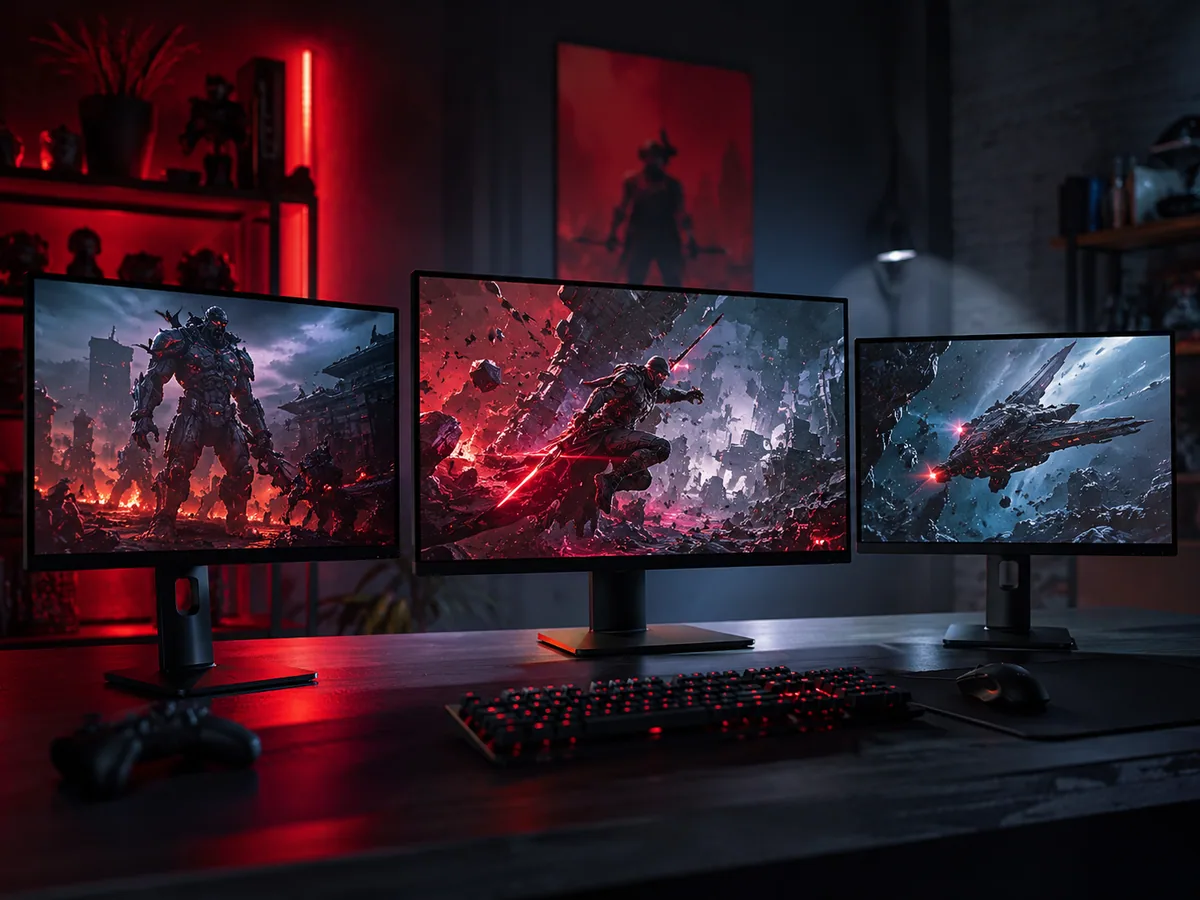
If you're serious about gaming but have limited funds, a 1080p 144Hz monitor is your best friend. These displays offer an enormous leap in smoothness and responsiveness compared to standard 60Hz monitors, and they're perfect for competitive titles like Valorant, CS:GO, League of Legends, and Overwatch. Because 1080p requires less GPU power than 1440p or 4K, you can push high frame rates even with mid-range graphics cards.
Look specifically for IPS panels at this price point. IPS technology provides better color accuracy and viewing angles compared to older TN panels, meaning your games look great even if you're not sitting perfectly centered. The combination of 1080p resolution and 144Hz refresh rate is the sweet spot for budget-conscious gamers who want to maximize performance without sacrificing visual quality.
What to Look For Under $200
- Minimum 144Hz refresh rate (165Hz if you can find it)
- IPS panel for color accuracy
- AMD FreeSync or NVIDIA G-Sync compatibility
- 1ms response time or lower
- Curved display (21-24 inches recommended)
- Adjustable stand with tilt and height adjustment
- At least one DisplayPort connection
Budget monitors often lack some premium features like USB hubs or height-adjustable stands, so prioritize the core gaming specs. A monitor with perfect specs but a terrible stand that you have to prop up with books is worse than one slightly less impressive on paper but with proper ergonomics.
Mid-Range Gaming Monitors: $200-$500
The mid-range segment is where gaming monitors truly shine in 2026. This is where you'll find the best value-to-performance ratio, with manufacturers packing incredible features into reasonably priced displays. Most gamers will find their ideal monitor in this price range.
The Sweet Spot: 1440p 165Hz
1440p 165Hz monitors are the Goldilocks zone of gaming displays in 2026. They deliver a noticeable upgrade in visual clarity compared to 1080p while maintaining high frame rates that feel incredibly smooth. The jump from 1440p to 4K doesn't feel as dramatic as the jump from 1080p to 1440p, which makes 1440p the perfect balance point for most gamers.
At this price point, you'll find displays with exceptional HDR support, wide color gamuts (usually 95-98% DCI-P3), fast response times under 1ms, and premium build quality. Many mid-range monitors feature curved designs that enhance immersion and reduce eye strain during long gaming sessions. The curved bezel helps create a more cohesive visual field and makes 1440p gaming feel even more immersive.
Advanced Features Available in This Range
Mid-range gaming monitors often include features once reserved for premium displays. HDR (High Dynamic Range) support makes bright areas brighter and dark areas darker with more detail preserved in both extremes. Height-adjustable stands allow you to position the monitor at the perfect ergonomic height. USB hubs built into the monitor reduce cable clutter. Some even include built-in RGB lighting that syncs with your games.
Look for monitors with HDMI 2.1 or DisplayPort 1.4 connections. These newer standards support higher bandwidth, allowing you to run 1440p at 240Hz+ without compression. If you're planning to upgrade your graphics card in the near future, future-proof your monitor purchase by ensuring it has these modern connection standards.
Gaming Genres and 1440p Performance
1440p 165Hz monitors are genuinely versatile. They handle competitive shooters beautifully - 264 pixels of horizontal resolution gives you more screen real estate to spot enemies. They make open-world games look stunning with plenty of detail in textures and environments. Racing games benefit from the high refresh rate for buttery-smooth steering and braking feedback. Strategy and MOBA games get a bigger screen to manage more information without pixel-peeping.
Premium Gaming Monitors: $500 and Up
If you've got the budget and want the absolute best gaming monitor experience available in 2026, the premium tier delivers technology that seemed impossible just a few years ago.
4K OLED: The Future is Now
4K OLED gaming monitors represent the pinnacle of display technology. OLED stands for Organic Light-Emitting Diode, meaning each pixel produces its own light. This eliminates the need for a backlight and allows for perfect blacks - the pixels simply turn off completely. The result is infinite contrast ratios, vibrant colors that pop off the screen, and visual fidelity that makes even graphics from a few generations ago look stunning.
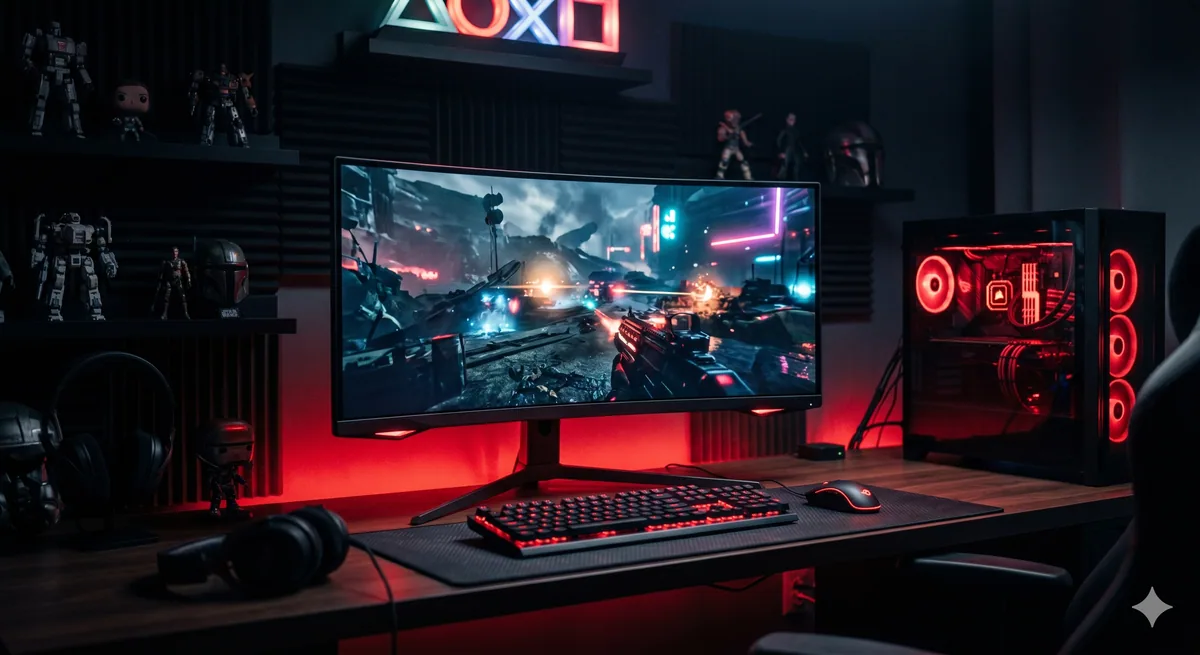
The LG and Samsung OLED panels dominating the 2026 market support up to 240Hz refresh rates at 4K resolution. This is genuinely astounding - just three years ago, 4K 120Hz was considered bleeding-edge. Now 4K 240Hz is becoming standard among premium gaming monitors. Pair a 4K OLED display with a high-end GPU like an RTX 5090 or equivalent, and you can experience games at maximum settings with incredible smoothness.
Why OLED Gaming Monitors Are Worth the Premium
OLED displays provide response times in the sub-0.1ms range - essentially instantaneous pixel response. This eliminates ghosting entirely and makes competitive gaming feel incredibly responsive. The black levels are so perfect that horror games become genuinely immersive in darker rooms. The color accuracy is exceptional, making OLED displays excellent for creative professionals in addition to gamers.
OLED burn-in used to be a concern, but 2026 OLED gaming monitors include sophisticated anti-burn-in technologies like pixel shifting, screen savers, and brightness limiting. If you're careful about leaving static images on screen for hours (which is good practice regardless), OLED monitors will last for years without issues.
Other Premium Options
If OLED is beyond your budget, premium IPS and VA monitors at this price point offer incredible color accuracy, superb HDR implementation, and ultra-smooth 240Hz+ refresh rates. Some premium non-OLED displays use mini-LED backlighting, which provides local dimming zones that create near-OLED contrast levels at a slightly lower price point.
Premium gaming monitors often include top-tier build quality with fully adjustable stands, extensive customization options, and warranty coverage that reflects their higher price. Many include warranty periods of 3-5 years compared to 1-3 years for budget models.
Practical Tips for Choosing Your Gaming Monitor
Match Your GPU to Your Monitor
There's no point buying a 4K 240Hz monitor if your graphics card can only manage 4K 60Hz. Conversely, a budget 1440p 144Hz monitor paired with an RTX 5090 is underutilizing your hardware. Research what frame rates your GPU can achieve in the games you play, then choose a monitor that matches. As a general rule, your monitor's refresh rate should be slightly higher than the average frame rates your GPU can produce.
Consider Your Gaming Style
Competitive esports players prioritize refresh rate and response time over resolution and color accuracy. If you live and breathe Valorant or Counter-Strike, a 1440p 240Hz+ monitor with a 1ms response time matters more than perfect color reproduction. Casual gamers and visual enthusiasts should prioritize resolution and panel quality. If you play story-driven games and don't care about competitive advantage, 1440p or 4K with excellent colors and HDR support will make you happier.
Budget for Monitor Longevity
A gaming monitor will last 5-10 years with proper care. This is one piece of hardware that doesn't become "obsolete" the way graphics cards do. Spend a bit more on a monitor you genuinely love because you'll be staring at it every day for years. A $300 monitor you enjoy using every day is better than a $150 monitor you resent for its cheapness.
Based on the Digidang team's experience handling thousands of gaming transactions every month since 2020, here are the tips we share most often with our loyal customers.
- Watch YouTube gameplay over written reviews: Written reviews sometimes hype too hard or carry bias. Watch 10-15 minutes of gameplay to see if pace and visuals match your taste.
- Check minimum vs recommended specs: Many gamers buy without checking their PC specs and end up refunding. Use a tool like "Can You Run It" before purchasing.
- Wait for official sales: Steam Summer Sale, PSN Holiday Sale, and Epic Mega Sale happen on schedule every year. Discounts of 50-80% are normal 3-6 months after launch.
- Start with single-player: New gamers should start with strong narrative single-player titles (RPGs, action-adventures) before jumping into competitive multiplayer.
- Join local communities: Indonesian Discord and Telegram groups often have mod, build, and tip recommendations you won't find on international forums.
Why Buy Gaming Products at Digidang
As a digital gaming marketplace operating since 2020, Digidang is built by and for Indonesian gamers. Here's why thousands of gamers trust Digidang for their top-up and gift card needs:
- Competitive pricing: We continuously monitor other marketplace prices and adjust so you always get the best deal without hidden cost drama.
- Instant automated process: Digital codes arrive in your inbox in minutes, not hours or days. We know gamers want to play right away.
- 24/7 customer service: Our support team is ready to respond via WhatsApp and email anytime. Not a bot - you chat with humans who understand gaming.
- Safe and trustworthy: Payments are processed via official payment gateways (Midtrans, Xendit), not personal transfers. Your data is protected with 256-bit SSL encryption.
- Complete product variety: From Mobile Legends, PUBG, Genshin Impact top-ups, to Steam, Roblox, PlayStation gift cards - all available on one platform.
- Active community: Digidang has an active Discord and Instagram community sharing tips, builds, and discussions about Indonesian gaming.
Check the Digidang catalog to see all available gaming products, or visit our about page to learn more about Digidang's mission to build a healthy Indonesian gaming ecosystem.
Conclusion & Key Takeaways
Best Gaming Monitors for Every Budget in 2026 isn't a static gaming topic - it evolves quickly with new game releases, publisher updates, and trends in the Indonesian gaming community. The Digidang team will continue to update this article to keep it relevant to current conditions.
Key points to remember from this guide:
- Always prioritize account security: Enable 2FA, never share passwords, and avoid buying from untrusted sellers.
- Compare prices across multiple sources: Even though Digidang offers competitive pricing, the habit of comparing before buying is a healthy behavior.
- Take advantage of events and promotions: Significant savings come from combining Digidang discounts with publisher in-game events.
- Verify every transaction detail: User ID, region, and denomination - small mistakes can lead to non-refundable losses.
- Use Digidang's support: Our customer service is active 24/7 via WhatsApp and email. Don't hesitate to reach out with any questions.
Have more questions? Check the FAQ section below, or contact the Digidang team directly via WhatsApp for free consultation on the gaming products you need.
Frequently Asked Questions (FAQ)
How did you decide which games make this list?
Digidang's editorial team selects games based on Metacritic ratings, active player counts, gameplay mechanics, value for money, and feedback from the Indonesian gaming community. We update this list regularly as new titles release.
Is the information in this article reliable?
Yes. All Digidang content is written by editors who actively play and follow the gaming industry. Every recommendation goes through internal verification before publication, and we update articles when new information becomes available.
How do I buy gaming products on Digidang?
Browse our shop, pick the product you want, add to cart, and checkout. We accept bank transfer, e-wallets (OVO, GoPay, Dana, ShopeePay), credit cards, and QRIS. Digital codes are delivered instantly to your email after payment is confirmed.
How fast is digital code delivery?
Codes are delivered automatically to your email within 5 minutes after successful payment. If you don't receive it within 30 minutes, check your spam folder or contact our support team via WhatsApp.
Does Digidang guarantee codes work?
Every code from Digidang is guaranteed valid. If you run into any redemption issues, our customer service team is available 24/7 via WhatsApp and email. We'll replace the code or process a refund if the problem is on our side.
Is it safe to buy digital gaming products on Digidang?
Absolutely. Digidang has been operating since 2020 with thousands of successful transactions. All payments go through official payment gateways (Midtrans, Xendit) with 256-bit SSL encryption. We never share your personal data with third parties.
Why should I choose Digidang over other marketplaces?
Digidang specializes in digital gaming products with competitive pricing, instant delivery, and responsive support. Our team understands gamers because we're run by an Indonesian gaming community ourselves.
James Park
Gaming enthusiast and marketplace expert sharing tips, guides, and the best gaming deals.